The Flip Side of Success: A 5-Step Recovery Strategy to Overcome Burnout and Health Crises
 makedream
2026年2月12日
0
Mental Health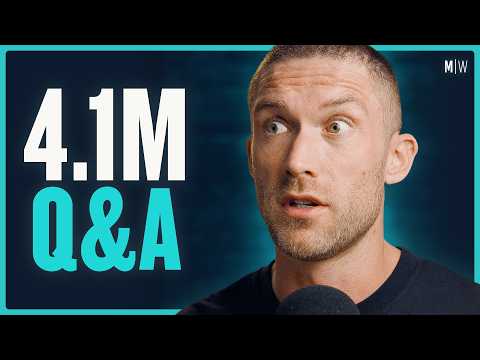
Comments (0)
Log in to leave a comment
No posts yet
makedreamLog in to leave a comment
No posts yet
Chris Williamson, a YouTuber with 4 million subscribers, made a surprising confession at the peak of his career. He admitted that the very period when his views were exploding and his fame was skyrocketing was, in fact, the most painful and helpless year of his life. We are taught to view the sprint toward success as a virtue, but hidden behind it is a massive invoice known as the "lifestyle cost."
Even if everything looks perfect on the outside, internally, the entropy of the physical system increases and the nervous system falls into a state of overload. This is the reality of the invisible illness that brings high achievers to their knees. Simply telling someone to "just rest" is not the solution. You must implement a strategy to rebuild the body based on data and neuroscience to achieve sustainable performance.
Many people immerse themselves in biohacking to maximize efficiency. However, trendy diets aren't a one-size-fits-all answer. In fact, they can be toxic.
The recently popular carnivore or keto (LCHF) diets can be fatal to those with specific genetic predispositions. About one-third of the population belongs to the Hyper-Absorber group, which is sensitive to dietary cholesterol. Due to variations in the ABCG5/8 genes, these individuals experience a sharp rise in LDL levels when consuming fats. In particular, if you have the APOE4 genotype, a high-fat diet exponentially increases the risk of Alzheimer's and cardiovascular disease. This means the diet everyone else raves about could be clogging your arteries.
It's time to move past simple cholesterol numbers. Monitor these precision biomarkers instead:
If you are experiencing unexplained brain fog, check your environment as well. Mycotoxins are detected in 93% of patients with Chronic Fatigue Syndrome. Ochratoxin A, which occurs particularly in damp buildings, paralyzes mitochondrial energy production.
The hardest part of changing your lifestyle is the plateau where no visible results occur. Chris Williamson called this the Lonely Chapter. It is a vacuum state where old social networks collapse before a new identity is established. This is a mandatory process the brain must go through to recalibrate new reward circuits.
If your current path is eroding your health, try following this decision tree:
Notably, alcohol is not a stress reliever but a depressant that destroys the brain's reward system. Abstaining for just 6 months allows the thickness of the cerebral cortex, which was thinned by alcohol, to recover. After 7.3 months, cognitive function normalizes. Only when the frontal lobe is revitalized can the quality of your decision-making change.
Bad habits are like deep grooves etched into the brain. Rather than trying to force-fill them, it is more scientific to create a new path alongside them. Abandon perfectionism and apply the "Never Miss Twice" rule. A one-day slip-up is fine, but missing two days in a row weakens the new synaptic connections.
| Week | Goal | Core Strategy |
|---|---|---|
| Week 1 | Lower Resistance | Simplify the start of every action to around 2 minutes. |
| Week 2 | Path Strengthening | Use "habit stacking" to attach a new habit immediately after an existing one. |
| Week 3 | Identity Integration | Provide micro-rewards along with an identity declaration. |
High achievers tend to try and "score" even their hobbies. However, you need activities with ambiguous outcomes, such as yoga or dance. These aimless activities activate the brain's Default Mode Network (DMN). It is the most powerful recovery tool for calming an overactive sympathetic nervous system and awakening creativity.
In 2026, true competitiveness depends not on how long you work, but on how sophisticatedly you recover. Read your body with data and upgrade your brain with neuroplasticity. Sustainable performance comes not from enduring pain, but from distributing energy wisely. The condition score you record today will be the key metric determining your success 10 years from now.