The Illusion of AI Coding and Technical Bankruptcy: How Engineers Turn Debt into Assets in 2026
 makedream
23 मार्च 2026
0
Computing/Software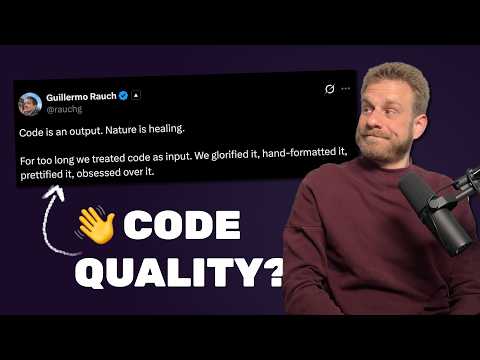
Comments (0)
Log in to leave a comment
No posts yet
makedreamLog in to leave a comment
No posts yet
Code is no longer a hand-carved craft. As of 2026, half of the code we encounter is output spat out by AI. While anyone can generate thousands of lines of logic with the click of a button, ironically, the rate at which that code is actually deployed to production has plummeted to around 30%. Quantity has surged, but quality is disastrous.
Do not rejoice simply because you obtained code that "works." Unverified AI code is like a high-interest payday loan that your future self will have to repay. We are currently living in an era of "Infinite Intern Overproduction"—a swamp of garbage code generated by tireless digital interns. Now, a developer's skill is determined not by typing speed, but by how sharply they can excise and refine the debt created by AI.
Traditional code reviews cannot catch AI flaws because AI tells grammatically perfect lies. While humans make mistakes in logic, AI hallucinates non-existent features based on statistical probability.
The reality of AI code as evidenced by 2026 data is shocking. The frequency of Common Weakness Enumeration (CWE) vulnerabilities is 2.74 times higher than that of humans, and performance regressions due to unnecessary I/O operations or inefficient loops are a staggering 8 times more frequent. The most serious issue is code duplication. AI does not look for existing utility functions within a project. Instead, it continuously creates new, redundant features in its own way.
When this fragmentation accumulates, the system turns into a "Frankenstein." The overall structure vanishes, and an "architecture drift" occurs where every single file operates on a different logic. Gartner warns that due to this structural complexity, maintenance costs for enterprises will more than double by 2027.
Banning AI is not the answer. You must build a system to control AI. Here are practical strategies to straighten out a chaotic codebase.
Manual guidelines are useless. Utilize Linters as more than just syntax checkers. You need a Mechanical Execution Guarantee system that blocks the build itself if logging and error handling are not included in every API handler. Use tools like Saropa Lints to automatically detect security settings and resource disposals that AI habitually omits.
AI suffers from tunnel vision, unable to see the system as a whole. Monitor whether external libraries added by AI conflict with existing designs by visualizing npm ls or go mod graph. Any code that ignores internal standards and encroaches on new domain boundaries must be prioritized for refactoring immediately upon discovery.
AI can write SQL that runs, but it cannot write optimized queries. Use tools like SQLAI.ai to analyze the execution plans of AI-generated queries and preemptively block missing indexes or N+1 query issues. Automate benchmarking on datasets similar to production and reject any code that exceeds threshold limits.
AI code explains the "How" well, but it doesn't know the "Why." Senior engineers must now become editors-in-chief. During PR reviews, require authors to explain the design rationale in writing. Any code that cannot be logically explained is a candidate for immediate deletion. Furthermore, context engineering—injecting core project principles into the AI beforehand via documents like PATTERNS.md—is essential.
Create a Self-Healing QA framework where AI directly analyzes test failures and even proposes patches. By establishing a virtuous cycle that collects error data to sophisticatedly refine initial prompts, the quality of generation itself will improve.
The capabilities required of a senior developer in 2026 have completely changed. Now, Systems Thinking—designing the flow of the entire system—is more critical than the ability to memorize syntax.
| Legacy Competency | 2026 Essential Competency (Emerging) | Core Value |
|---|---|---|
| Rapid coding and syntax mastery | Context Engineering | AI output control and consistency |
| Unit feature implementation | System Design and Connectivity | High-level business logic design |
| Manual debugging | AI Governance and Auditing | Systematic verification of complex AI errors |
You are no longer a code writer; you are a decision-maker. The time spent agonizing over how a piece of code will affect the system ten years from now is far more valuable than the time spent writing one more line of code.
The moment of truth has already arrived. You must allocate at least 20% of your engineering resources to resolving debt. Controlling AI strictly from an editor's perspective is the only way to prevent technical bankruptcy and sustain growth.