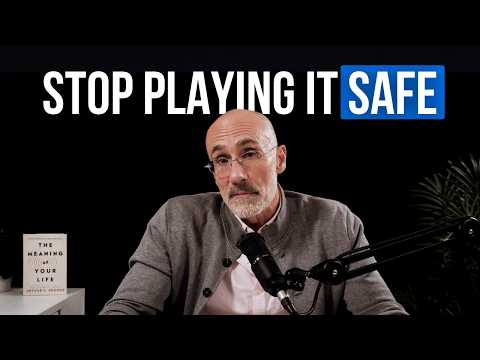
Stop Playing It Safe If You Want to Find Love
Key Takeaway
Embracing personal risk, seeking biological complementarity rather than similarity, and accepting the temporary nature of breakup pain are essential for successful romantic relationships.
Highlights
Young adults exhibit lower willingness to take personal risks, which correlates with decreased rates of falling in love and having sex.
Data from a 2018 study of 160 daters in their twenties shows that individuals who learn from a breakup experience higher subsequent relationship satisfaction and lower conflict.
62 percent of long-term relationships currently originate on dating applications.
A 1995 study demonstrated that individuals are more attracted to the scent of people with immunologically dissimilar major histocompatibility complexes.
Mental pain following a breakup averages slightly above three on a one-to-seven scale and decreases by approximately 0.07 points each week.
Timeline
The Role of Personal Risk in Romance
Lower risk-taking among younger adults impacts major life milestones like falling in love and engaging in sexual relationships. Viewing romance through an entrepreneurial lens means putting valuable emotional resources at risk for potential rewards. Although social rejection triggers activity in the dorsal anterior cingulate cortex of the brain, experiencing and recovering from rejection provides critical lessons that improve future relationship outcomes.
- Younger generations display lower risk-taking behaviors compared to previous generations, which reduces instances of falling in love.
- Giving one's heart away functions as an entrepreneurial risk necessary for romantic success.
- Breakups teach social cognitive maturity, romantic agency, and coherence through postmortem analysis.
Compatibility Versus Complementarity
Dating applications frequently allow users to eliminate profiles that lack direct overlap in values, lifestyles, and interests. However, excessive similarity stifles attraction because human biology favors complementarity over finding a literal body double. Olfactory studies reveal that people naturally find the scent of partners with different immune system profiles more attractive, ensuring broader immunological defenses for potential offspring.
- 62 percent of long-term relationships currently start on dating apps.
- Over-curating profiles for extreme similarity leads to high compatibility but low attraction.
- The major histocompatibility complex drives attraction toward immunologically dissimilar partners.
Managing Breakup Pain and Recovery
Courage allows individuals to act despite the fear of rejection or heartbreak. While the brain registers emotional distress intensely to prevent future threats, this perception of permanence is false. Tracking recovery shows that heartbreak pain steadily decreases each week, allowing individuals to return to normal functioning and dating within a relatively short timeframe.
- Paralyzing fear of negative outcomes leads to poor romantic decisions.
- The limbic system falsely signals that emotional pain from a breakup is permanent to deter future threats.
- Breakup pain rates slightly above three on a one-to-seven scale and declines by about 0.07 points each week.
Description
Why does discovering genuine romantic connection prove so challenging, even when it remains our deepest desire? In this conversation, I offer three core principles for approaching romance today. Building a lasting partnership demands far more than merely crossing paths with someone special. It forces us to confront how anxieties, initial attraction, true alignment, and personal loss shape our choices in romance. Looking at insights from social science and emotional well-being, I unpack how we can enter the dating world with greater bravery, showing why the painful moments we naturally resist often prepare us to love more deeply. In this Clip, you’ll learn: • Why fear of rejection can change the way we approach relationships • What taking healthy risks has to do with finding love • Why compatibility is more complicated than simply finding someone like you • How modern dating can shape what we look for in a partner • What heartbreak can teach us about future relationships • Why becoming better at love sometimes requires being willing to get it wrong Where to find Arthur Brooks: • Website: https://arthurbrooks.com/ • In-person Retreats: https://retreats.arthurbrooks.com/ • Newsletter: https://www.arthurbrooks.com/newsletter • X: https://x.com/arthurbrooks • Instagram: https://www.instagram.com/arthurcbrooks/ • Facebook: https://www.facebook.com/arthurbrooks/ • YouTube: https://www.youtube.com/@drarthurbrooks • LinkedIn: https://www.linkedin.com/in/arthur-c-brooks/ • Email: officehours@arthurbrooks.com Watch the full podcast: How to Find Love in 2026 https://www.youtube.com/watch?v=aYdC5G_-vPE