These 2 Tiny AI Models Run on Your Phone, Not the Cloud
Key Takeaway
Desert Ant Labs' offline models Who and Eye perform speaker diarization and image classification locally on user devices at hundreds of times real-time speed without cloud processing.
Highlights
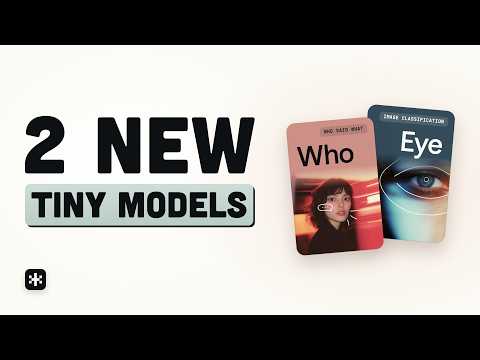
Desert Ant Labs released two offline, on-device beta models named Who and Eye in SDK version 4.0.
The Who diarization model processes a 57-minute audio recording in 6.4 seconds at approximately 950x real-time speed on an M5 Pro MacBook.
The Eye image classifier processes 10,000 photos in under a minute using WebGPU in Chrome or 5.5 milliseconds per photo on an M6 Mac neural engine.
The Eye model categorizes images across 558 tags, scores aesthetics, detects closed eyes, and groups duplicate shots without performing OCR text extraction on receipts.
Both models operate under a source-available license that remains free up to 100,000 monthly active devices with an SDK license check that transmits no user media.
Timeline
Introduction to Desert Ant Labs and New Version 4.0 Models
Desert Ant Labs builds compact, task-specific AI models designed to execute natively on user devices rather than relying on heavy cloud infrastructure. Founded by team members from the AI video editing application Detail, the company targets use cases in audio and video processing. Both new models operate under version 4.0 of the SDK while remaining in beta testing.
- Desert Ant Labs expanded its offline model family with two beta models named Who and Eye in SDK version 4.0.
- The company develops small, specialized models that run locally on consumer hardware without requiring cloud APIs.
- The initial product catalog launched in September with 18 compact models spanning audio, text, and vision tasks.
Speaker Diarization Performance and Capabilities of Who
Speaker diarization analyzes audio tracks to isolate conversational turns and identify overlapping speech when multiple individuals talk simultaneously. While Who achieves competitive accuracy on benchmark datasets like AMI compared to PyAnote, error rates increase during earnings calls with up to 20 speakers or when microphones are positioned far from participants. A demonstration application combined Who with macOS transcription to process podcast audio at 393x real-time speed.
- The Who model assigns numbered speaker IDs and precise timestamps down to 10 milliseconds without transcribing text or recognizing names.
- Who runs at approximately 950x real-time speed on an M5 Pro MacBook, completing a 57-minute podcast episode in 6.4 seconds.
- A custom macOS application pairing Who with Apple's built-in speech transcriber labeled four speakers in a podcast recording in 11.9 seconds on an M2 Max MacBook Pro.
Image Classification and Sorting Capabilities of Eye
Image sorting and tagging execute entirely on-device or within web browsers without uploading files or performing optical character recognition on receipts. Confidence scores determine match thresholds, setting standard positive matches at 0.5 and stricter filters at 0.9 for sensitive content detection. The browser demonstration showcased local organization of mixed photo folders into specific functional groups and best-shot selections.
- The Eye model classifies images across 558 categories, evaluates aesthetic scores, detects facial expressions, and identifies duplicate shots in a single inference call.
- Eye processes a photo in 5.5 milliseconds on an M6 Mac neural engine and 41 milliseconds using WebGPU in Chrome, enabling classification of 10,000 photos in under a minute.
- A browser-based web application utilizing LiteRT.js sorted 105 unstructured photos into categories like receipts, screenshots, documents, and blurry shots in 16.1 seconds.
Licensing Terms and Privacy Architecture
The licensing framework permits free unlimited inference up to a threshold of 100,000 monthly active devices while maintaining local data privacy. Because all model computations run natively on consumer hardware or web browsers, sensitive personal files remain confined to the user device environment.
- Both Who and Eye operate under a source-available license that remains free for applications with up to 100,000 monthly active devices.
- The SDK performs a monthly license check that transmits no user media files, audio tracks, or photographs.
- Local execution ensures all data processing remains on the user device rather than relying on cloud servers.
Description
Desert Ant Labs is back with two new tiny AI models that run entirely on your device: Who, which figures out who is speaking and when in any recording, and Eye, which tags, scores and sorts your photos without uploading a single image. In this video we look at how both models work, check the numbers, and test them with two demo apps: Who Said What for macOS, and an Eye photo sorter that runs in the browser. 🔗 Relevant Links Who: https://desertant.com/models/who/ Eye: https://desertant.com/models/eye/ Who Said What (macOS app, Who + Apple's speech transcriber): https://github.com/andrisgauracs/who-said-what Eye Photo Sorter (source): https://github.com/andrisgauracs/eye-photo-sorter Eye Photo Sorter (try it live in your browser): https://andrisgauracs.github.io/eye-photo-sorter/ ❤️ More about us Radically better observability stack: https://betterstack.com/ Written tutorials: https://betterstack.com/community/ Example projects: https://github.com/BetterStackHQ 📱 Socials Twitter: https://twitter.com/betterstackhq Instagram: https://www.instagram.com/betterstackhq/ TikTok: https://www.tiktok.com/@betterstack LinkedIn: https://www.linkedin.com/company/betterstack 📌 Chapters: 0:00 Desert Ant Labs is back 1:09 Desert Ant Labs in 40 seconds 1:51 Who: speaker diarization explained 2:16 950× faster than real time 2:39 Who vs pyannote: where it wins and loses 3:27 Who Said What: the demo app 3:50 Live demo: labelling a full podcast 5:28 Eye: a whole photo report in one call 6:08 Speed and confidence scores 6:59 Eye in the browser with LiteRT.js 7:48 Live demo: sorting 105 photos 10:35 Things to keep in mind 11:13 Final thoughts