Building Muscle at 40: What Nobody Tells You
Key Takeaway
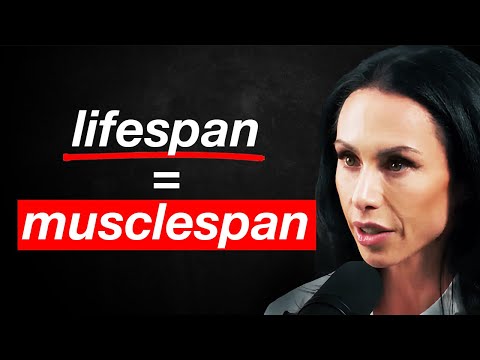
To reverse age-related muscle breakdown and maintain 'muscle span,' individuals must prioritize high-quality protein intake and resistance exercise to overcome the decreasing efficiency of protein synthesis that begins after age forty.
Highlights
Muscle health can be stimulated through only two primary mechanisms: exercise and dietary protein.
Aging causes a decrease in the efficiency of muscle protein synthesis, requiring older adults to consume more protein to achieve the same 'youthful' response.
The amino acid leucine is the critical trigger for initiating muscle protein synthesis, though it must be part of a complete amino acid profile.
Being sedentary is described not just as lack of activity, but as a specific 'disease state' that accelerates aging and muscle loss.
Creatine is highlighted for its dual benefits, supporting skeletal muscle at lower doses and brain health at higher doses.
Plant-based diets require a higher total protein intake (around 1.6g per kg) compared to animal-based diets to meet essential amino acid thresholds.
Timeline
The Fundamentals of Muscle Span and Aging
The speaker introduces the concept of 'muscle span' as a critical component of overall lifespan and health span. She emphasizes that skeletal muscle health can change the trajectory of aging if nutrition and exercise are optimized. A major focus is placed on the two primary triggers for muscle growth: resistance exercise and dietary protein intake. The discussion highlights that being sedentary should be viewed as a distinct disease state rather than just a lack of movement. Additionally, the speaker notes that aging naturally impairs the efficiency of muscle protein synthesis, creating a 'runaway train' effect of muscle loss if not addressed early.
Sarcopenia and the Lifecycle of Muscle Health
This section explores the progression of muscle health from youth through midlife and into old age. The speaker explains that muscle mass and bone density typically peak in a person's thirties, making the early years vital for laying a strong physical foundation. She argues that sarcopenia, often seen as an elderly condition, actually has a youthful phenotype characterized by low strength and mass in younger populations. To maintain tissue in later life, individuals must combat the physiological decrease in muscle efficiency. The core message is that proactive maintenance is easier than attempting to regain lost muscle quality later.
Protein Thresholds and the mTOR Trigger
The conversation shifts to the specific nutritional requirements needed to trigger mTOR and muscle protein synthesis. While younger individuals might see a muscle response from as little as five to fifteen grams of protein, older individuals require significantly more to see any benefit. The speaker recommends that those over fifty or sixty increase their protein per meal to a range of 30 to 50 grams to mount a 'youthful' physiological response. This insight is based on pioneering research from experts like Dr. Donald Layman and Bob Wolfe. Essentially, the threshold for stimulation rises as we age, necessitating a more aggressive approach to dietary protein.
Supplements: Leucine, BCAAs, and Essential Amino Acids
The speakers discuss the role of amino acid supplements, specifically focusing on leucine and branched-chain amino acids (BCAAs). The expert advises against taking leucine in isolation, as amino acids like leucine, isoleucine, and valine work synergistically and must be balanced in the blood. Supplementation is most useful when a meal is low in protein, acting as a 'key' to start the muscle-building engine. However, the speaker stresses that a full spectrum of essential amino acids is required to provide the actual substrate for tissue growth. She emphasizes that while the 'bros' in the gym have long advocated for this, clinical science now backs the necessity of these specific nutrient thresholds.
The Food Matrix: Creatine and Plant-Based Protein
The final segment explores the benefits of whole foods and the differences between animal and plant-based protein sources. Creatine is identified as a standout nutrient, with five grams supporting muscle and twelve grams potentially benefiting brain health. The speaker points out that while a pound of steak only contains about two grams of creatine, the 'food matrix' provides other essential vitamins and minerals. Regarding plant-based diets, she clarifies that while it is possible to get enough protein from plants, the total amount consumed must be higher. Plant-based individuals should aim for approximately 1.6 grams of protein per kilogram of body weight to compensate for lower concentrations of essential amino acids.
Description
Muscle loss is one of the biggest drivers of aging, weakness, and loss of independence after 40. In this video, Dr. Gabrielle Lyon explains the science of muscle aging (sarcopenia), how protein intake and exercise affect muscle health, and what actually works to maintain strength, mobility, and longevity as you age. Subscribe to RESPIRE for more science-based health tips: https://www.youtube.com/channel/UCyNaCRf6Aaljcm9ZWARawXw re·spire (verb) – (1) to breathe (2) to recover hope, courage, or strength 🌟🌟🌟 NEW VIDEOS EVERY WEEK 🌟🌟🌟 This video is a condensed and highly edited version of the full 181 minute podcast from @HubermanLab. For more information, watch the full episode (link below) and follow the podcast. Dr. Gabrielle Lyon is a board-certified osteopathic physician, founder of Muscle-Centric Medicine, and a New York Times bestselling author known for promoting skeletal muscle as crucial for longevity, disease prevention, and performance. Andrew Huberman is an American neuroscientist and tenured associate professor in the department of neurobiology and psychiatry and behavioral sciences at Stanford University School of Medicine. Podcast Host: Andrew Huberman Podcast Guest: Dr. Gabrielle Lyon YouTube: @HubermanLab Source: https://www.youtube.com/watch?v=WFcYF_pxLgA&t=26s&pp=ygUNaHViZXJtYW4gbHlvbg%3D%3D Fair Use Disclaimer 1. Under section 107 of the Copyright Act 1976, allowance is made for "fair use" for purposes such as criticism, commenting, news reporting, teaching, scholarship and research. Fair use is a use permitted by copyright statute that might otherwise be infringing. Non-profit, educational or personal use tips the balance in favor of fair use. 2. We do not own the rights to all content. They have, in accordance with fair use, been repurposed with the intent of educating and inspiring others. We must state that in no way, shape or form are we intending to infringe rights of the copyright holder. 3. Content used is strictly for research and education, all under the Fair Use law. #andrewhuberman #hubermanlab #fitness #aginggracefully #longevity #protein #muscle #menshealth #healthtips